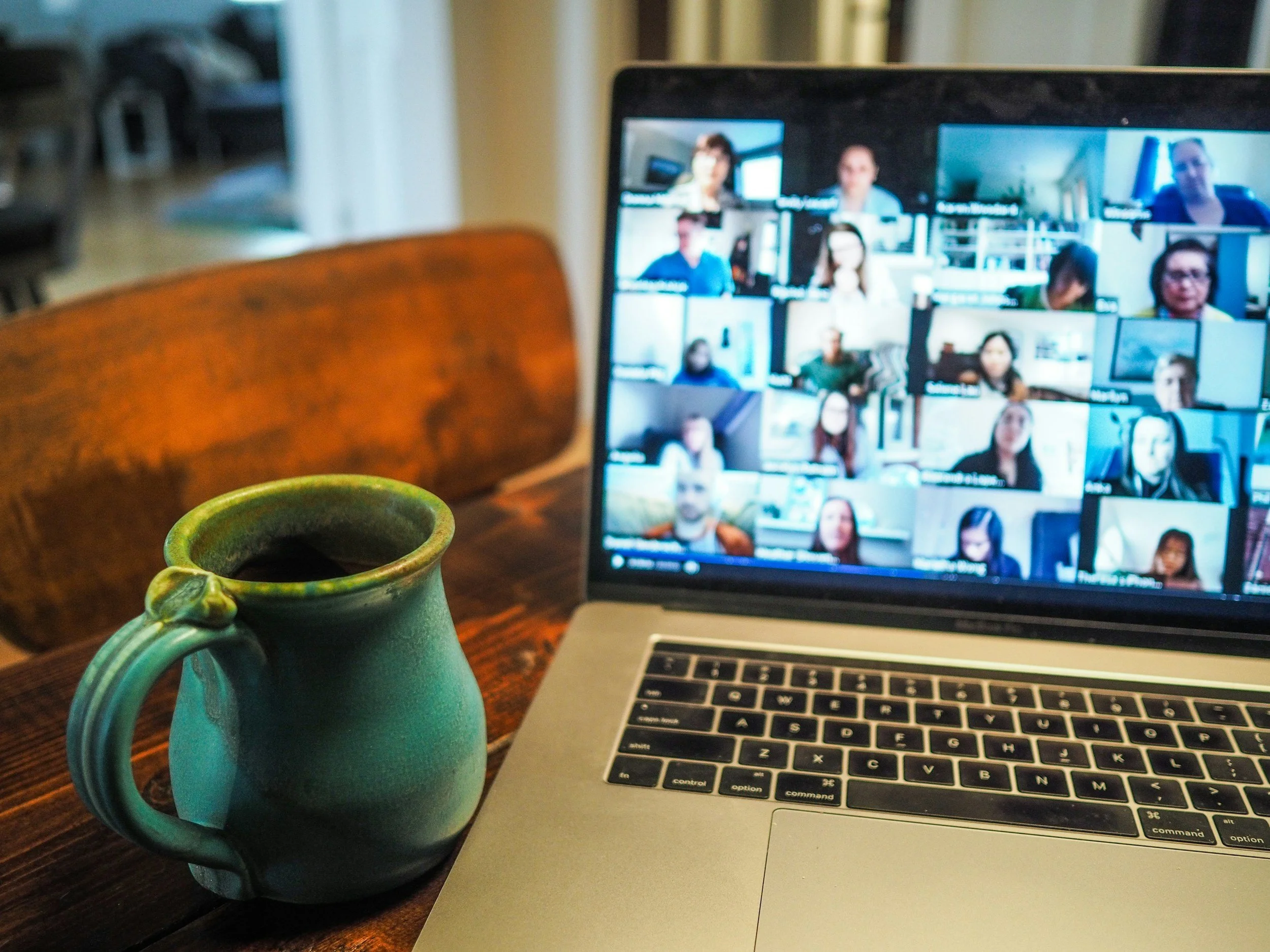
People must feel respected and safe—physically and emotionally
Leading Remote Teams
Excerpted from the Authority Magazine Interview
Treat your team’s capacity like an operating budget
What is your Back Story?
I’ve been drawn to science and technology for as long as I can remember. My family celebrated the good that technology could do. My father was an industrial engineer, his brother a nuclear engineer, and both were the first on that side of the family to attend college. I grew up on classic science fiction at a time when the U.S. felt optimistic about science and tech. As a kid I built circuits from hobbyist magazines and taught myself to code on a school timeshare computer.
Naturally, I headed to engineering school. Freshman year blunted the joy of electronics and computers, so I switched majors. Mechanical engineering used the same math but with a learn-by-doing ethos and professors who reignited my curiosity. Summer jobs in labs working on nuclear fusion and space plasma physics gave me my first real taste of building instruments. One day at a neighborhood hardware store, the owner asked me what I was studying. When I told him, he smiled and replied, “bless you!” That was one of several epiphanies that led me to want to create things that make real and positive difference.
After graduation, I became a process engineer in a Silicon Valley electronics factory, applying statistical methods to find and fix problems on the line. That early blend of hands-on engineering, data-driven problem solving, mission focus, and multidisciplinary work have shaped everything I’ve done since.
Today my firm helps executives create the strategy and conditions for rapid, high value product delivery. We base that on approaches I’ve developed as a leader and an engineer across a range of company sizes and markets. My most recent corporate role was as the VP and General Manager of the software business at Agilent Technologies, where we had a large global team that gave me the chance to develop leadership approaches that I think will be relevant to your readers.
Can you share the most interesting story that happened to you since you started your career?
This is the story of how an earthquake saved the most important product you’ve never heard of.
In the late 1980s I was on a team building a cutting-edge electronic instrument. We were spread across two sites about a half-hour apart. We had email and landlines, but dispersed development was unusual then—and hardware work demands frequent, hands-on testing—so distance made everything harder. The Palo Alto site housed HP Labs, where the physicists leading the program spent most of their time. I sat in the Santa Clara division that would ultimately market the product. We tried to bridge the gap with weekly face time at Labs, but progress was slow, the team never fully gelled, and an “us versus them” vibe persisted.
On October 17, 1989, the magnitude-6.9 Loma Prieta earthquake changed everything. I was at Labs that day. Sprinklers burst and drenched sensitive equipment and papers; internal structures slammed together and bent the building’s steel frame. After a brief closure, the building was condemned. The Labs physicists moved into our pen in Santa Clara—and overnight we became one team in one place.
Our rate of progress improved immediately. Instead of emailing or waiting days for meetings, we took a few steps to hash out problems. All the hardware prototypes sat in a central area, so someone was always running a test, and everyone could see progress in real time. Within a few months, we had a working prototype. We went on to release the HP5071a—still in production over 30 years later as the Microchip 5071b—a frequency standard essential to timekeeping, navigation, and communications. I don’t think it would have happened on any reasonable timeline without the quake forcing us to work shoulder-to-shoulder. When you check the time, when your plane lands under GPS control, or when you use high-speed internet, think of the earthquake that helped make it possible.
What was the funniest mistake you made when you were first starting? What did you learn from that?
Early in my career I was determined to make a mark. I worked in a factory that assembled printed circuit boards for early personal computers. Machines placed most components; skilled operators and technicians kept everything humming. As a process engineer, my job was to boost productivity by improving quality and reducing downtime.
One morning I marched up to the lead technician and launched into a post-mortem about a downtime incident. He listened, then said, “Good morning, John—how are you today? How is your family doing?” I was gobsmacked. My first feeling was confusion at being blocked.
It took a while for the lesson to land. I was so focused on getting things done that I’d neglected to see the people I depended on as people. After that, I made a point of getting to know my colleagues and treating them as people first. It helped me to be effective and more human. I’m grateful to Rich G. for delivering that lesson with a simple greeting.
What advice would you give to other business leaders to help their employees to thrive and avoid burnout?
Start with the basics: people must feel respected and safe—physically and emotionally. That’s the minimum condition.
To prevent burnout, set reasonable boundaries for life outside work—and model them. Codify norms so employees trust that their careers won’t suffer for honoring those boundaries. People also need purpose: a sense that their work matters beyond a paycheck. Purpose fuels resilience and staying power. And purposeful people need some autonomy: motivation fades when nothing is within their own initiative. Employees share responsibility for these conditions, but leaders set the tone.
Leaders can go further by investing in people as individuals and as a team. Be curious about each person’s life and career goals and help them grow in those directions. As a team leader, model the basics: show up on time, communicate respectfully and directly, serve the group before yourself, run effective meetings, and be fully present. Whether you’re in a room or on video, if you’re distracted during a meeting, you’re signaling that the interruptions matter more than the interaction. It will be noticed. The clearest signal of respect is undivided attention.
Finally, treat your team’s capacity like an operating budget—it’s finite. Every new addition must be balanced by delaying something else. Planning and direction changes are costly. Planning consumes your most experienced people. Minimize “planning waste”: sessions that go nowhere, long-range roadmaps destined to be discarded in a quarter, and similar churn. Change course only at well-defined times, and hands off the wheel the rest of the time. Otherwise it burns time, breeds disengagement, and accelerates burnout.
Can you articulate the five main challenges regarding managing a remote team?
Workday overlap
Distributed teams need enough shared hours to collaborate in real time. Without overlap, people default to low-urgency channels like email or chat, which slows problem-solving and encourages handoffs over teamwork. Our division at Agilent spanned roughly eight sites across India, Australia, the U.S., and Europe. No single person could reasonably cover all time zones, so we deliberately increased overlap, spread the load, and invested in periodic travel so people could work—and break bread—together.
Becoming a team
When every interaction is scheduled, it’s harder to build the trust that comes from knowing each other as people. Example: I worked with a company split between Australia and California. People in each location trusted each other but viewed the other location with suspicion. It took deliberate leadership, lots of conversations, and in-person visits to build the relationships that ultimately made the whole team work better.
Developing spontaneous interaction
Remote tools kept us productive during the pandemic but at the cost of missing the serendipitous interactions that happen at the office. This is especially tough on new hires who lack relationships and may not know when to ask for help. Beginning with the pandemic we tried to recreate “hallway time”: virtual coffees and celebrations (sometimes with mailed snacks), improv exercises to improve teamwork, open “office hours” where leaders were on a drop-in call each week, and a mantra—“pick up the phone”—to favor live conversation over text. Offices can still add unique value here, but most companies haven’t redesigned them for what they do better than a home office.
Effective meetings
Effective meetings are even more critical with remote teams than they are when everyone is in a room together. This is especially true when some people are in the office and others are not. Before the pandemic I had staff meetings where some people would phone in, others were in the room, and still others used a video system. Those who were on the phone had no way to know when to speak and often could not hear well. Even those on video participated less than those in the room. We decided that if anyone could not appear in person, we would do the meeting fully on video with one camera and mic per person. It’s way too easy for people to be distracted and not fully engage with group calls when they are remote, and it is hard to read the cues that we see naturally in person. It takes extra thought and commitment to make every meeting matter enough to be worthy of people’s full engagement.
Hiring, performance, and succession at a distance
Interviewing is imperfect even in person, and international hiring adds legal and logistical complexity. For smaller companies, contractors or intermediaries can be simpler. Example: We learned that timely feedback and truly knowing your people take extra effort when calendars are packed with calls—so we tightened feedback loops and were intentional about regular one-on-ones to keep performance, development, and succession moving.
Based on your experience, what can one do to address each of those challenges?
Workday overlap
If you have a choice, hire for substantial overlap—either in similar time zones or with people willing to flex their schedules. When gaps are unavoidable, ask teams to adjust hours on select days to create shared time. Treat overlap like gold: reserve it for live collaboration (small groups or one-on-one), and don’t schedule over it.
Becoming a team
Build relationships deliberately. Use brief daily standups to focus on weekly goals, surface roadblocks, and get people working together. Set specific, measurable, achievable goals and track them relentlessly. Budget periodic travel so people can work—and break bread—together. Sponsor team-designed remote events (guest speakers, customer talks, demos, games, improv, invention contests, creative projects—once, more than 50 people contributed instrumental and vocal tracks to record a song together). And when someone consistently doesn’t team well or is unproductive in a remote setting, make a change.
Re-creating spontaneous interaction
Leaders must sponsor and develop this. Chance encounters that happen in the office broaden people’s social connections well beyond your immediate team, so have people from outside your immediate organization as guests in “get to know” sessions. Reserve shared “open” time in the common workday for unscheduled problem-solving and model the behavior yourself. Engage the team to propose ways to lower the barrier to ad-hoc conversations and “lucky coincidences.” Face-to-face visits help, but even without travel, you can nurture spontaneity with regular drop-in moments and lightweight rituals.
Make meetings work
Start and end on time. Share agenda and goals up front, invite the right people, and assign a note-taker (AI can help, but a human must curate). Keep a visible log of notes, actions, and decisions for follow-up. The leader ensures every voice is heard and decisions are made with clear owners and next steps. For remote groups, ask everyone to be on camera and fully engaged—your planning effort should earn their attention. If even one person is remote, make the meeting fully remote to level the experience. Leave space between meetings for breaks, and—if overlap is limited—protect time for unscheduled interaction. For daily standups, consider quick breakouts so small groups can clear roadblocks immediately.
Hiring, termination, and succession
Adapt your people practices to their location. Respect local laws and customs: some countries restrict work hours; others limit collection of individual performance data. Go beyond interviews — bring candidates in on paid contracts to see how they fit under real conditions before committing to a hire. If you have the scale, build an intern-to-hire program. Make sure to vet remote candidates to confirm they are who and where they claim to be. One of my clients had a candidate who claimed to be living with family in Phoenix but turned out to be in southern China.
Terminations are tougher remotely: be respectful and direct, do it live, and follow local requirements. Consider recording the call or having a witness (preferably HR) on the call.
For succession, assume anyone might move roles and plan accordingly: cross-train so no single person is the only one who can do a job, and run a succession review once or twice a year to identify hard-to-replace roles—and act.
Can you give a few suggestions about how to best give constructive criticism to a remote employee?
When people are remote, unplanned conversations are less easy and as you observed, it’s harder to read facial expressions and body language. As the leader you must give your people both encouragement and correction with minimal delay, whether remote or local. The faster the feedback, the more effective it is. Use video so you can see each other’s faces. Have a one-on-one discussion as soon as possible after the behavior occurs. Singling people out in a group call may be awkward for praise and humiliating for corrections. Be aware of cultural and legal differences as appropriate, but don’t sugar coat.
The rest is the same whether the person is remote or local.
Can you specifically address how to give constructive feedback over email?
I use email only as follow-up to a live feedback discussion. I would not recommend using email as a first resort. It can create the appearance of a document trail leading to disciplinary action. If that is what you want, then send the email after you have had the live conversation. The email feedback needs to be factual – what happened, how did it affect the work or the people involved, and what needs to change. If there is an agreement about what will change, state it.
What do you suggest can be done to create a healthy and empowering work culture with a team that is remote and not physically together?
Summarizing the discussion we’ve had so far, here are some principles I recommend to build a healthy culture when the team isn’t in one place:
Start with safety, respect, and boundaries. People need to feel that they can bring bad news or a contrary view and be heard respectfully, and that their off-work lives matter. Codify work-life boundaries and model them so careers aren’t penalized for honoring them. Connect people to purpose and give them autonomy—that’s the fuel for resilience and ownership. Expect everyone to treat each other with respect. Practice what you preach, or you are wasting your breath.
Treat workday overlap like gold. Hire for time-zone overlap when you can; when you can’t, create it on select days. Protect shared hours for live collaboration in small groups, not status updates. Use real-time conversation rather than endless threads to get things done.
Build the team, not just the org chart. Run brief daily standups focused on goals and roadblocks; give constructive feedback as soon as possible; track clear, achievable commitments. Invest in connection events. Budget periodic travel if you can. If someone consistently can’t team or be productive in a remote setting, make a change.
Design meetings that engage the team. Start and end on time. Share agenda and goals in advance. Invite the right people and track notes/actions/decisions. Ensure every voice is heard and decisions have owners. Expect engagement: cameras on, distractions off. For daily standups, use quick breakouts to clear blockers immediately.
Recreate serendipity on purpose. Look for ideas to help people broaden their connections outside the immediate team, for new people to have mentors, and for everyone to get to know each other as whole people and not just as worker bees.
Manage work capacity as a budget. Planning and churn have real cost, so minimize them. Working from a ranked backlog and limiting re-ranking to specific intervals helps to make a habit of this. Give people time to do the work and learn from it before changing direction. Burnout drops when churn drops.
Adapt your people practices to remote work. That applies to hiring, development, succession, and termination.
Underneath this is the lesson Rich taught me back at the factory: put the human before the task. Respectful collaboration, clear purpose, autonomy within clear limits, and dependable rhythms of live collaboration create the conditions for a remote group to become a healthy, high-trust team.
If you could inspire a movement that would bring the most amount of good to the most amount of people, what would that be?
It’s funny that you ask that – I’ve been thinking about “effective altruism” and “long-termism” recently and have noticed that many proponents use the idea of “most good for the most people” to tilt at imagined future threats instead of solving real problems now. I would rather focus on some of the very pressing problems humanity faces today and chip away at one of them. It’s hard to convince people to see it as in their interest to solve problems for other people’s children and grandchildren or even their own! In Cixin Liu’s novel The Three-Body Problem, a disaffected scientist invites an alien species to conquer Earth. Clearly this was a poor decision, but it unites the people of Earth to meet the challenge. The movement would help us see global warming, pandemics, disinformation, and environmental contamination as alien invasion level threats.
Can you please give us your favorite "Life Lesson Quote"?
I have been fortunate to have had many great mentors, and I’ve written some of those lessons as a book for my children. When I took my first management role. I asked a senior leader in the company what I needed to do well to succeed. She said, “Three things: Listen, do as you say, and when you say ‘no’, give a reason.” I have used this compact and powerful advice and shared it widely because it is such a good foundation for everything else, both at work and at home. The first two are life journeys – listening well and being a person of your word go to the heart of what I think it means to be a wise and good person.
Copyright © 2025 John W Sadler Jr - All Rights Reserved